Thursday, 9 February 2023

A Colourful Character

Last year I gave a presentation to the Campbelltown and Airds Historical Society titled Colourful Characters of Campbelltown. I included 18 of some of the town's most lovable identities from the past. One I thought I would share with History Buff readers is Bob Hazelwood. Much of the information for his story came from Gillian Blackstone, daughter of former Campbelltown Council alderman Arch Walker. Ted Sedgwick also contributed to his story.

Robert Hazelwood was born in Campbelltown in 1898, the son of Stephen and Sarah Hazelwood. Bob worked on the railways before helping Arch Walker on the farm after he retired from the railways. He lived in Mrs Rixon’s boarding house alongside the railway line in Broughton Street. 

Bob was a heavy drinker, and one local remembers seeing him get hit by a car one afternoon outside the picture theatre. Somehow Bob managed to curl himself up in to a ball before he hit the road and rolled down the road a bit, got up dusted himself off and continued on his shuffle home.

Gillian Walker remembered him as a very thin, rather quiet man with a deep voice. He was very loyal and helped her father Arch immensely.

Bob would sometimes walk down the street and catch a local he knew and ask him for a winner. Off he would then go to the SP bookie. Most stories about Bob revolve around him going to the horse races on a Saturday- his day off. He was in work clothes all week, but on Saturday he would get all dressed up in his best suit with hat atop his head and walk to the station to catch the train for his day out. On his return at the end of the day he would alight the train looking slightly dishevelled having had one too many beers. Travelling on foot, swaying from side to side he made his way home to his little pensioner unit in Lindesay Street which was just north of Mereil Street in North Campbelltown.

Arch and Bob had finished milking one afternoon, the door of Arch’s truck was open and a stray German Shepherd dog, that had been hanging around the front gate to the farm for several days, decided he would hop into the truck and go home with them. The two scaredy cats Arch and Bob weren't game to push him out, so they sidled in next to him and brought him home for dog loving Gillian to deal with. He became a beloved member of the family. 

Every Christmas for years Mrs Walker would serve up a Christmas lunch for Bob, place it on a tray with all the trimmings, roast chicken and assorted vegetables, pudding with cream and custard, bon bon, nuts, lollies, the lot. Arch and Gillian would deliver it piping hot to his place. When they arrived, Bob had set his little table with tablecloth, cutlery, napkin etc. in readiness. Gillian would pop the bon bon with him, he'd put on his party hat to please her and we left him to enjoy his lunch. Although they had asked him to join them at home over the years he always declined and was happy to dine in his own home.

Bob died on 26 October 1980, he was hit by a car while walking home along the Moore/Oxley by-pass. He was 82.

Unfortunately I don't have a photo of Bob. If anyone of our readers do, I would love to see one!


Written by Andrew Allen


Friday, 13 January 2023

Debunking the myth of Amelia Fowler

 There is a curious story that has been perpetuated over the years, about the ghost that haunts Eschol Park House, that of Amelia Fowler. Amelia purportedly fell down the stairs of the house and died, (see our blog on Eschol Park House). 

Further investigations show that in fact Amelia did not die in Eschol Park House, but in Queensland. She had married her first cousin William John Graham at Inkerman Downs Station in January 1865 but tragically died 5 months later on the station. 

Inkerman Downs Head Station (State Library of Queensland)

Interestingly, another first cousin of Amelia’s, John Graham Macdonald, married another first cousin, Adelaide Anne Graham. All of them, Amelia, William, John and Adelaide were grandchildren of John Warby through Warby’s daughters Sarah, Eliza and Mary.

John Graham MacDonald took up farming in Victoria joining his brother Alexander in Geelong. Alexander was a well-known explorer, surveyor, accountant, and authority on Aboriginal place names and languages. John learnt surveying from his brother. 

He returned to Campbelltown at 21 and married Anne Amelia Graham there. He subsequently began farming in the Bellarine district, but at 25 he sold his interests in Victoria and rode north with a mob of horses to explore the Peak Downs region of Queensland in search of pastoral lands. Both of them took up large areas, and in 1862 took up the lease to occupy Inkerman Downs. I suspect that John encouraged his cousin William to come north to Inkerman Downs where they were until 1866. 

The final resting place of Amelia Fowler is not known. She has a memorial in St Peter’s Cemetery, but there is no burial record for her in the Church Register. It is unlikely she was returned to Campbelltown for burial from North Queensland. There are burials on Inkerman Downs station, but there is no record of Amelia’s death or burial. Her death is announced in the newspaper only. Either way, Amelia’s death at such a young age, a mere 5 months after her marriage was a tragedy, and may she Rest in Peace, wherever she lies.

Written by Claire Lynch

Sources - Trove, Ancestry, Burdekin Library, various internet articles


Tuesday, 20 December 2022

Tom Frost

Thomas Frost was born on September 10th 1889. He was a Campbelltown man his whole life. Born to parents John and Elizabeth Frost, he was one of 14 children, and was baptised, confirmed and buried at St Peter’s Church, Campbelltown, as was his father before him.

Thomas, or Tom as he was known, married Theresa May Watson in 1924 in Camden. During the 1920s, Tom showed a few horses at the Campbelltown Show, including his trotting horse “Clarry Elmo”, as well as exhibiting shorthorn cattle.

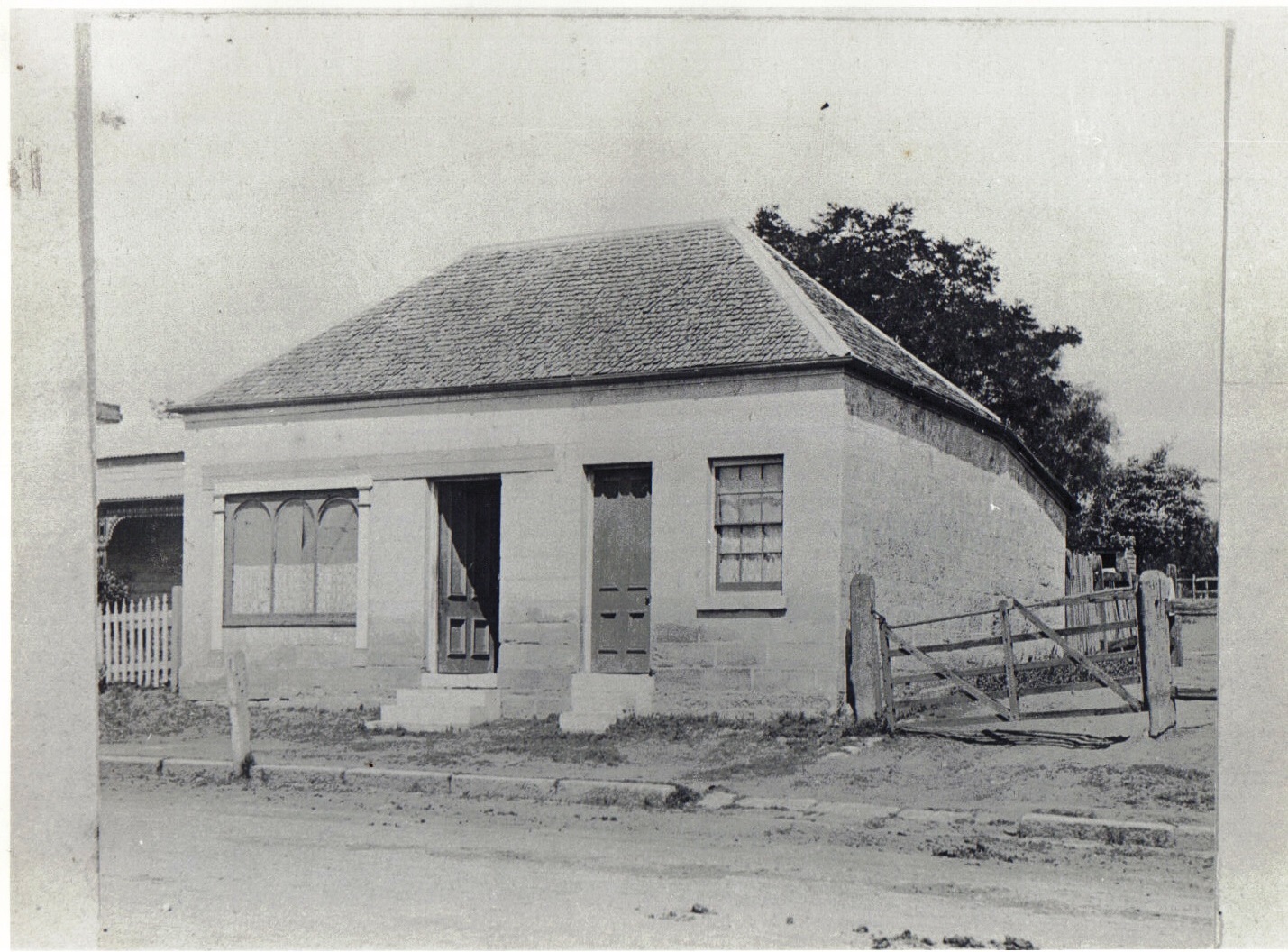
Tom, who was described as a large framed man, lived at 304 Queen Street. This was a brick house set right up to the footpath. His dairy consisted of a long paddock of 23 acres where Koshigaya Park and the H.J. Daley Library are today, running along the railway, and behind the old Town Hall. Fisher’s Ghost Creek ran though the land, which he leased from P. Maher of Douglas Park. The dairy buildings on the property were built of timber and fibrolite, and had four bails for milking.

In the corner of Tom’s land was a railway gatekeeper’s residence. The cottage was used by a man named James Ashford. Ashford always seemed to at loggerheads with Tom Frost with constant bickering. It was told that one of Tom’s cows developed milk fever and the owner pumped the udder up with a bicycle pump- a recognised treatment at that time. Ashford on viewing this procedure disclaimed to a third person- “See what his doing, pumping the udder up to get a better price for her at the sale!”

On the census, Tom stated his occupation from 1913, up to 1954, as a dairyman. He died in 1955, and wife Theresa died in 1958. She is buried with Tom at St Peter’s Cemetery.

We can't find a photo of Tom! Please let us know if you can assist.


Tom Frost's house in Queen Street (Campbelltown and Airds Historical Society)


Written by Andrew Allen


Sources:

Memories of South Western Campbelltown, NSW 1931-1938 – Fred Seers


Dairy Farming in the Campbelltown Area – Ivor G. Thomas lecture notes, CAHS


McBarron, Eddie 1990

The Soldier's Settlement - (Poultry) Campbelltown, NSW 1918-60


Thursday, 8 December 2022

One of the three - Jonathan Boon

 Nathaniel Boon and his wife Sarah were the proprietors of the Three Brothers Inn (later known as Holly Lea) with licenses ranging from 1832 to 1835. Their Inn was named for their triplets, Nicholas, Jonathan and James whose birth was announced in the Sydney Gazette in November 1830. 


Jonathan Boon, (one of the triplets and possibly the most well-known), was a publican, very handy with his fists, and a good horseman. It was reported that he was a good prize fighter, and also an excellent race rider. He acted as Clerk of the Course at Picton races during 1856. He established the first hotel in Wagga – The Commercial, and held the licences to several pubs in both Wagga Wagga and Albury from the 1850s through to the 1870s. He married his wife Sarah, a publican’s daughter, in 1854 in Picton.

He had several racehorses in the 1850s including Lady Basquine, Lorimer and Whalebone, and was keen to match race them for large prize money. Lady Basquine and Whalebone were later stolen from Jonathan.

For a very short period of time during 1860 Jonathan tried his luck at the Snowy River gold diggings but seemed to spend more of his time fighting in several boxing matches. He then moved to Albury where he became a publican again, and a member of the Albury Jockey Club.

Around 1865 Jonathan moved back to Wagga where he unfortunately had to declare insolvency. It was at this time he was described as a horse trainer. By 1868 Jonathan held a publican’s licence again. 1870 saw Jonathan insolvent again, but bounced back by 1872 to open his hotel named The Retreat. 1877 saw Jonathan insolvent yet again, being unwell, and losses in business due to drought.

The All Nations Hotel, previously known as the Builders Arms, 
one of the Wagga Hotels that Jonathan was proprietor of. (fb)

When Jonathan retired from the hotel business he turned his hand to being a veterinarian.

Jonathan was often seen in court, either as a witness or defendant, often had up on charges of drunkenness, use of profane language, assault, or other such charges, including being the plaintiff in a case where he had been stabbed by another man during a scuffle. The last twenty odd years of Jonathan’s life seem to have had an increase in court appearances. After taking ill at home, in his old hotel The Retreat, in Peter St Wagga, he was taken to hospital where he expired on the 15th May and was buried in Wagga.

Written by Claire Lynch

Sources - Trove, facebook page lostwaggawagga


Monday, 28 November 2022

Remembering the Victims

On Friday morning November 25, I  had the privilege of presenting a talk on the Richardson-Lack massacre on the front lawn of the Council building. The presentation was combined with a convoy against domestic violence. Campbelltown Council today installed two purple benches as part of its 16 days Activism Against Gender-based Violence- one on the site of the massacre and one at Koshigaya Park. The Purple Bench Project honours all victims of family based domestic violence.

If you haven't already, I recommend you read our post from some years ago on the massacre at the following link:

https://campbelltown-library.blogspot.com/search/label/Lack%20Sarah%20Sophia


The above photograph was taken on the exact site of the 1849 massacre. Seated on the purple bench are Alan Jarman and his daughter. Alan is a descendent of the victims and pinpointed the site from original police records.

Written by Andrew Allen


Thursday, 3 November 2022

The Immigrants Home mystery

 For some time now we have been researching the old “Immigrants Home” in Campbelltown, which was part of Caroline Chisholm’s scheme for placing new immigrant women into situations in the country where they would not fall prey to the temptations and poor conditions rife in Sydney for single women. 

The home in Campbelltown was a stopover for further travels into the “interior”. Similar homes were created in Goulburn, Maitland, and other locations. 

The good citizens of Campbelltown held a public meeting on the 5th February 1842, and resolved to “form a home for Immigrants in Campbelltown upon the plan adopted by Mrs Chisholm.” They felt that “it would afford great facilities to the settlers in the district, besides being attended with numerous advantages to the Immigrants themselves”. The home would be funded by public subscription. 

It was noted that the meeting was held at the Roman Catholic School House, which was what is now known as Quondong, the Visitor Information Centre. 

There has been some dispute as to where exactly the Immigrants Home was, but we believe we have solved the mystery.  We have a very poor photo of the “Old Immigrants Home” from the Town and Country Journal with a small accompanying article. The image was taken by P.C. Marlow. Many people believed Quondong was the immigrants’ home, but the article and photo in the Journal does not bear this out. We have tracked down a couple of sources that place it on the opposite side of the road to Quondong, on a block that ran between the convergence of Old Menangle Road and Appin Road. Where these two roads came to a point was where the house was. (1979 Aileen Hayden Oral History). 

In the obituary of John Hurley, it was noted that “Mr Hurley came to her (Mrs Chisholm) and besides materially helping her by his influence and purse in her admirable scheme he gave her a large house in which the immigrants could find a home whilst awaiting a situation.” This makes complete sense, as the block on which the old house stood was originally John Bolger’s grant, which had been sold to James Meehan, and eventually leased by John Hurley in around 1833, and known as Hurley’s Farm. 


Written by Claire Lynch

Sources - Trove, Oral Histories


Friday, 7 October 2022

Korean Comforts Fund

The Ingleburn RSL and Citizens' Comforts Fund was set up to provide support to servicemen in the Korean War 1950-1953. In 1953, the fund provided comfort packs that were sent directly to the soldiers. The packs were greatly appreciated by the men and reminded them of what they were missing from back home. Perhaps most importantly they demonstrated that the boys were not forgotten and that their service was appreciated by people they left behind. 

Two of the contents that appeared to be the most welcome were candles and beer. The candles were particularly useful, as in many places artificial light was the only source of illumination for the men. However, for the thirsty local soldiers, Aussie beer was the highlight in the comfort packs. The diggers sent back letters of thanks that probably shocked some local wowsers. 

The Campbelltown-Ingleburn News published a selection of the messages of thanks sent back by the soldiers. One such message from an L.A.C. Miller read "I was wondering if you may know of a girl of 17-18 who would like to write to me, I only get a few letters." I wonder did he receive a reply?

A total of £307 was raised for the comfort packs by the fund.


Above is an example of a comforts fund hamper from World War II (Australian War Memorial)


Sources:

Campbelltown-Ingleburn News 15 September 1953, 26 May 1953


McGill, Jeff 1993

Campbelltown Clippings

Campbelltown: Campbelltown City Council


Written by Andrew Allen