Saturday, 25 February 2012

Performing their duty or "legalised vandals"?

The demolition one quiet Sunday morning in 1981 of an old curiosity shop divided Campbelltown. The shop was built in 1840 and was once owned by former mayor C.J. Marlow who used it as a drapery. It stood between Dredge's Cottage and the old fire station and Town Hall Theatre. The last owner of the building was Gladys Taylor. Mrs Taylor left instructions in her will to use the proceeds of the sale of the land to go to institutions assisting the suffering and needy. This amounted to more than $60,000. Yet in carrying out their lawful instructions under the terms of her will, her executors were dubbed "legalised vandals" by some sections of the community.

The building was dilapidated and in a sad state of repair. The flooring was rotted and the stairs were too unstable to carry any weight. It was also not classified by the National Trust or Heritage Council. Yet it was just over 140 years old and recommended to be retained as it was seen as part of the old facade of the buildings lining the southern end of Queen Street. The demolition resulted in many letters of disapproval from some sections but as many in support of the demolition. One executor told the local newspaper "It was an old patchwork property and not even as 'historic' as at least one man still alive in Campbelltown today". Surprising then that this 140 year plus person escaped the attention of the world!

The demolition of C.J. Marlow's former drapery was just one of many fine historic buildings demolished in Campbelltown during the 1980s in the name of progress. One must ask however, if their demolition has added to the appeal and character of the town's business centre. At least in this case the generosity of Mrs Taylor meant that some people at least benefited from Campbelltown's loss.

The site of the shop is now the drive in entrance to the outside car park for Campbelltown Mall between Dredge's Cottage and the Town Hall Theatre.

C.J. Marlow's Drapery Store taken in the early 1900s
(Campbelltown and Airds Historical Society)


Written by Andrew Allen

Friday, 24 February 2012

National Trust Heritage Festival 2012

Campbelltown City Library will again be involved with activities for the annual National Trust Heritage Festival. The library is running an Inventing Competition for young people from under 9 to under 15 ages. Use your own ideas and materials to create a unique invention. Entries must be no larger than 50cm x 50cm x 50cm. The closing date for entries is April 5 and the winners announced on April 13. Entries will be displayed at HJ Daley library as part of a celebration of the festival. There's a great prize to be won for each category!

The library will also show a display based on the theme Creative Campbelltown. This display will reveal the creative side of Campbelltown from the past to the present. Included will be popular inventions throughout time and how Campbelltown adopted these. Also included will be some remarkable innovations and inventions from the local area over the years.

Friday, 10 February 2012

Politics in the Blood

I recently received a visit from former Campbelltown Council Alderman Frank Ward who now lives on the North Coast. He explained to me that he recently discovered the remarkable coincidence that his ancestor Charles Bull served as the second mayor of Campbelltown in 1883. He commented that had he known at the time he may well have got the few hundred extra votes he needed to win the State seat of Campbelltown in 1968. Frank served on Campbelltown Council from 1960 to 1969. He was proud to initiate the Council policy which required the electricity supplier to place its network underground. Campbelltown is today relatively free of unsightly and intrusive electricity poles.

Frank's great grandfather Charles Bull served as mayor from 1883 to 1884. Although gifted with using words and a smooth operator, he had an abrasive personality which quickly made enemies. He was replaced as mayor after one year by the more charismatic Alex Munro. Charles went on to later become mayor of Hurstville from 1891 to 1893 and later represented the seat of Camden in State Parliament. He died of blood poisoning after a bout of carbuncles in 1906, aged 60 years and is buried in Woronora Cemetery.

A new book on his son Charlie Francis Bull (Frank Ward's grandfather) is now available in the local studies collection at H.J. Daley Library.


                       Charles Bull, Campbelltown's second mayor from 1883 to 1884.

Sources: Charlie Francis Bull: His Life and Line by Diana Playford and Barbara Downie
              Boolarong Press 2011

              First Citizen: Mayors of Campbelltown Since 1982 by Jeff McGill
              Campbelltown and Airds Historical Society 1996


Written by Andrew Allen

Thursday, 2 February 2012

Whatever Happened to Steven Roach?

Steve Roach was a remarkably gifted artist and teacher. His talent saw him commissioned to create many works, mainly focusing on drawing historical buildings in the local area and further a field. He supplemented his business by selling his works in shops throughout the region and teaching art to his students in a studio in his home. He took part every year in the Fisher's Ghost Art Festival.

In November 1993, Steve Roach vanished without a trace despite an intense police search for him. He was last seen on November 9 leaving his cottage and was seen in the Ingleburn shopping centre. He drove there in his 1980 Datsun which was also never located. Steve was suffering from Alzheimer's disease at the time of his disappearance and was believed to be worried about becoming a burden to people. The mystery of his disappearance remains unsolved.

Some time after his disappearance Campbelltown Library acquired the working papers, photos and associated ephemera of Steven Roach. Included in the collection is material related to his time as a Sergeant in Morotai and Dutch Borneo during the Second World War as well as drawings and paintings of local buildings.


Sketch by Steve Roach of Macquarie Field House (Steve Roach Collection)


Written  by Andrew Allen

Wednesday, 18 January 2012

Community Heritage Grant for our Local Studies Collection

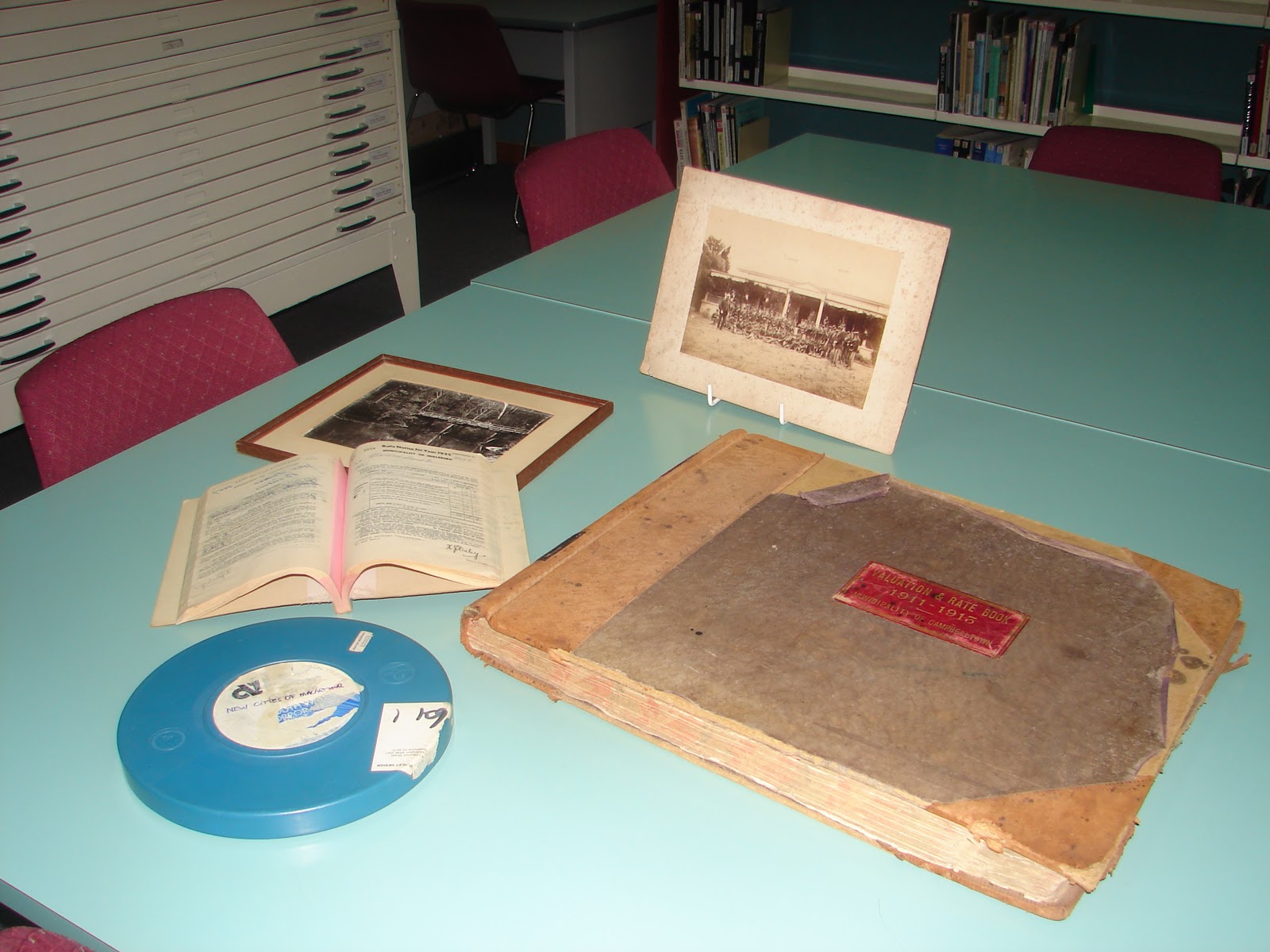
Late last year the library was awarded a $4400 grant to fund a significance assessment of its local information collection. This significance assessment is essential as it provides an understanding of why the collection is significant before appropriate decisions about long term management, conservation and interpretation can be made. It can lead to important outcomes including improved resource allocation, enhanced research value and greater community respect for cultural heritage preservation. A qualified assessor will undertake the assessment early in 2012.


Above are some of the items that will be assessed in the significance assessment of local studies.

Friday, 13 January 2012

Just Not Cricket!

I recently came across an amusing article from the Australian Town and Country Journal dated December 30, 1878. The article was based on a report of a cricket match between Campbelltown and a combined team from Menangle and Morton Park played on December 28. After Campbelltown won by 13 runs the reporter described how "The losing team were most "splendidly" treated, being left to fish for themselves, not even a sandwich or a glass of beer being provided by the Campbelltown Club. The sooner the committee resign the better." One would hope they lifted their game!

              Above is a photograph taken in 1881 of a cricket match at "Glen Lorne" on Appin Road.


Written by Andrew Allen

Thursday, 5 January 2012

The Water Tower


The photograph above was taken in the 1920s and shows Georges River Road (today's Colonial Street) with St. Patrick's College and a water tower in the background. The water tower held an iron open water reservoir that supplied the nearby Soldier's Settlement and by stand pipe to Kentlyn. It was filled by a main charged by a Pump Station situated in Hurley Park. In a recent interview with Margaret Templeman (nee Worrall), she explained how as a girl in the 1930s that sometimes on a hot afternoon after school, she would stop for a swim in the reservoir! It was located on the corner of Waminda Avenue and Colonial Street where the small shopping centre is now located.

Photo from the Moy Collection (Campbelltown and Airds Historical Society)


Written by Andrew Allen